
Shenzhen Lean Kiosk Systems CO., LTD
Watch our video below to fully explore LKS! Get an in-depth look at our company, including our dedicated team, advanced factory, bustling manufacturing workshops, and impressive sample showroom. Follow our latest updates to see how we lead the kiosk industry.
Card payment hardware can support debit and credit card transactions through an approved payment service provider.
Integration considerations include terminal dimensions, mounting position, power supply, communication method and application requirements.
EMV certification, payment processing and PCI-related responsibilities must be confirmed with the payment provider and the relevant system integrator.
Compatible NFC payment hardware can support contactless payment workflows.
The reader may be mounted behind a suitable panel or installed as a separate payment terminal, depending on the approved hardware design.
Reader positioning, antenna performance and enclosure material should be considered during development.
QR code scanners can be used for mobile payment workflows, parking ticket identification, order retrieval and validation.
Integration planning includes scanner type, reading distance, lighting conditions, communication interface and software data handling.
The supported payment methods depend on the customer's payment platform.
Cash payment kiosks can be configured with compatible bill acceptors.
Selection factors include supported currencies, note recognition requirements, cashbox capacity, anti-tampering considerations and service access.
Currency support must be confirmed for the selected device and destination market.
Coin-based payment systems may require coin validation, storage and automatic change dispensing.
The cabinet design must provide sufficient space for coin mechanisms, cash containers and maintenance access.
Change dispensing functions depend on the selected hardware and application software.
Thermal printers can provide parking tickets, payment receipts and transaction records.
Common configuration considerations include paper width, cutter mechanism, paper roll capacity, output position and paper replacement access.
Lean Kiosk's self-service product range includes configurations using 80 mm thermal printers.
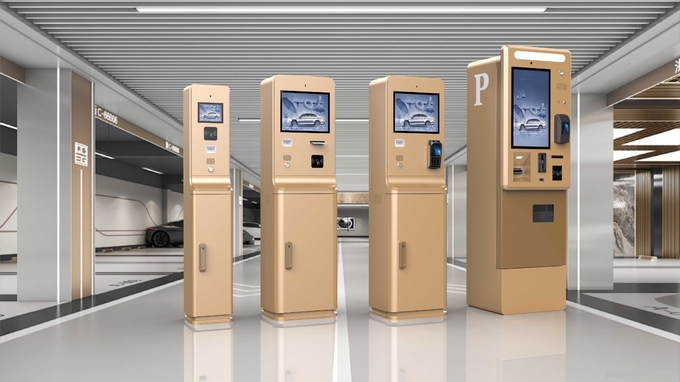 |
Drivers complete payment at a centralized parking pay station before returning to their vehicles.
The kiosk may retrieve parking information through a ticket, barcode, license plate number or another supported identifier.
A lane-side terminal allows drivers to complete supported payment steps near the parking exit.
Hardware design should consider driver reach, transaction time and integration with the barrier management system.
The system uses a ticket or barcode identifier to retrieve the relevant parking transaction.
The kiosk may require a scanner, payment terminal and receipt printer, depending on the workflow.
A parking management system may use license plate recognition or another identifier to retrieve the parking record.
Lean Kiosk can evaluate the kiosk hardware interfaces required for connection to the customer's recognition and parking management systems.
Each module requires appropriate voltage, current capacity, connectors and protective design.
Depending on the selected device, interfaces may include USB, RS-232, Ethernet or other manufacturer-supported protocols.
Payment peripherals may require device drivers, software development kits, APIs or middleware.
The customer's software team and payment provider should confirm application compatibility.
Cabinet locks, access doors, payment terminal mounting and cashbox protection should be reviewed according to the installation environment.
Cash handling, printer paper replacement, scanner cleaning and module replacement should be considered during cabinet design.
Identify the required payment methods and destination market.
Review the preferred payment devices and technical documentation.
Confirm physical, electrical and communication compatibility.
Design module positions and mounting structures.
Integrate the selected devices into the kiosk hardware.
Perform agreed device communication and functional checks.
Coordinate application testing with the software and payment providers.
Confirm the approved configuration before manufacturing.
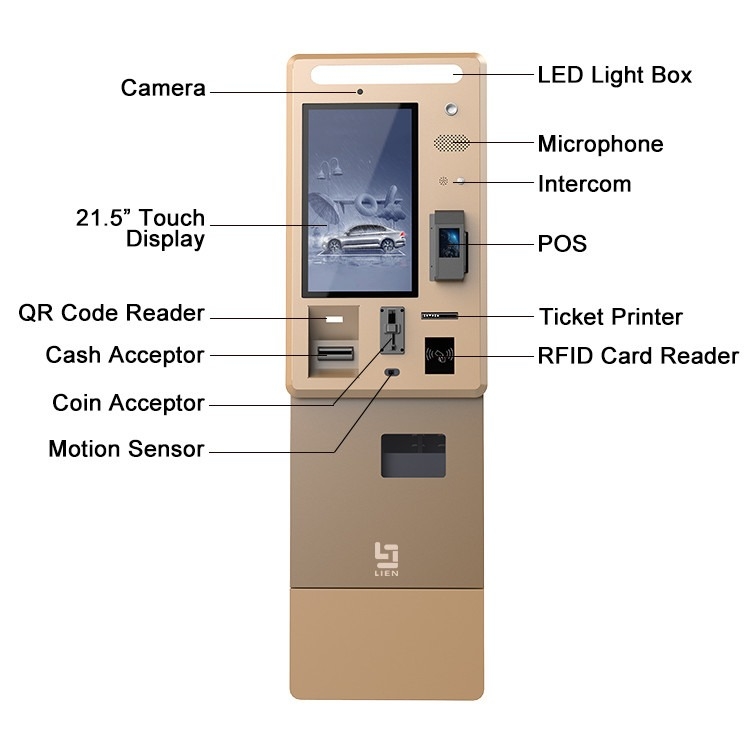
We review the module dimensions, mounting clearances and access requirements before finalizing the enclosure.
The integration team must verify the correct drivers, SDK, protocol and operating system compatibility.
Cashbox capacity, paper roll capacity and service access can be considered during hardware planning.
A coordinated peripheral arrangement helps organize the user interaction points and internal hardware.
Payment terminal approvals, currency support, acquiring relationships and software requirements must be confirmed for each market.
Lean Kiosk combines kiosk enclosure manufacturing with peripheral integration experience.
Our services help customers coordinate payment hardware, cabinet layout, industrial computing platforms and project-specific requirements.
This is particularly useful for parking system integrators that already have payment software but need a customized physical terminal.
Yes, subject to a review of the device dimensions, mounting requirements, power and communication interfaces.
A suitable kiosk can be configured with multiple compatible payment modules when sufficient space and software support are available.
Compatible scanners can be integrated. The actual payment service requires a supported software and payment platform.
Hardware communication interfaces can be planned around the customer's integration specifications.
Payment processing arrangements and financial certifications should be confirmed with the selected payment service provider.
Agreed hardware and interface checks can be included in the project testing plan. Live payment certification and end-to-end acquiring tests may require the payment provider.
Tell Lean Kiosk which payment methods, terminal models, currencies, operating systems and parking management interfaces your project requires.
Our team can help evaluate the appropriate payment hardware integration and kiosk configuration.